
Introduction
In the rapidly evolving landscape of consumer technology, few accessories have had as profound an impact on daily logistics and travel peace of mind as the Apple AirTag. Since its inception, this coin-sized tracking device has become ubiquitous, attached to keychains, slipped into backpacks, and hidden within checked luggage worldwide. However, a persistent gap has existed between the user’s knowledge and the service provider’s capabilities. For years, travelers have stared at their iPhones, seeing exactly where their lost luggage resides, only to be met with confusion or inability from airline staff who lack access to that specific data.
That dynamic is shifting dramatically with the latest developments in AirTag news and iOS updates news. With the introduction of the “Share Item Location” feature in iOS 18.2, Apple is bridging the digital divide between personal tracking and corporate logistics. By allowing users to generate secure, temporary links to share their item’s location with third parties—including major airlines—Apple is transforming the AirTag from a passive monitoring tool into an active recovery asset. This article delves deep into the technical mechanics, privacy implications, and real-world applications of this new feature, exploring how it integrates into the broader Apple ecosystem news landscape.
Section 1: The Technical Architecture of “Share Item Location”
Understanding the Find My Network
To appreciate the significance of the new sharing capabilities, one must first understand the infrastructure that powers it. The AirTag operates on Apple’s Find My network, a crowdsourced mesh network comprised of over one billion active devices. Whether it is the latest iPhone news highlighting UWB (Ultra Wideband) capabilities or older devices contributing Bluetooth signals, the network creates a global net of connectivity. When an AirTag is separated from its owner, it broadcasts a secure Bluetooth signal that can be detected by nearby Apple devices. These devices send the location of the AirTag to iCloud, allowing the owner to see it on a map.
Historically, this data was siloed for the owner’s eyes only, protected by end-to-end encryption. The new “Share Item Location” feature modifies this architecture slightly by creating a temporary, authenticated bridge. When a user activates this feature, the system generates a unique, time-limited URL. This URL grants access to a web-based map view of the item’s location, which updates automatically as the AirTag moves or is pinged by the network.
Integration with iOS 18.2 and Beyond
This functionality is a core component of recent iOS updates news. The implementation is seamless but sophisticated. The generated link is not merely a static screenshot; it is a dynamic interface. Technical specifications reveal that the link is valid for a limited duration (typically expiring after seven days or immediately upon the item’s recovery). This ensures that data hygiene is maintained and that location history does not persist indefinitely on third-party systems.
Furthermore, this update isn’t just for the latest hardware. While Apple Vision Pro news often dominates headlines with spatial computing, this feature works across the board, accessible via iPhones, iPads, and Macs. It represents a software-level enhancement that significantly boosts the utility of existing hardware, a strategy often seen in AirPods news where firmware updates unlock new audio capabilities long after purchase.
Section 2: Revolutionizing Airline Logistics and Travel
UI UX designer sketching mobile wireframes – Responsive web design concept banner. Web UX designer busy desk …
The SITA and Airline Partnership
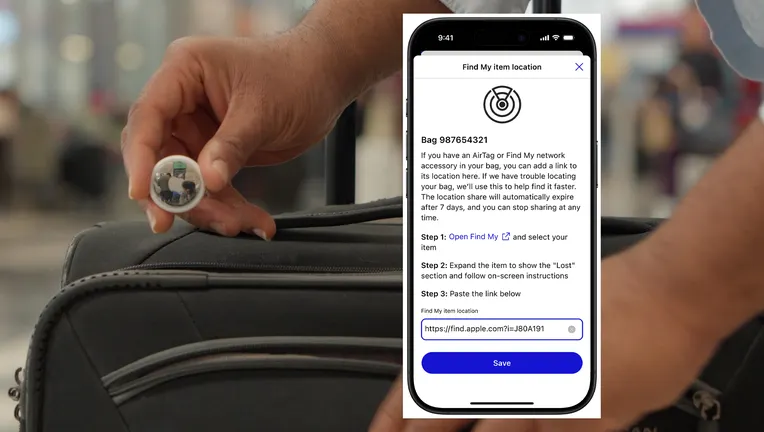
The most practical application of this technology is the collaboration with airline baggage systems. The frustration of lost luggage is a universal pain point. Previously, showing an airline agent your Find My app was anecdotal evidence; it didn’t integrate with their tracking systems like WorldTracer. The new update allows Apple to partner with SITA, the IT provider for the air transport industry, and major carriers.
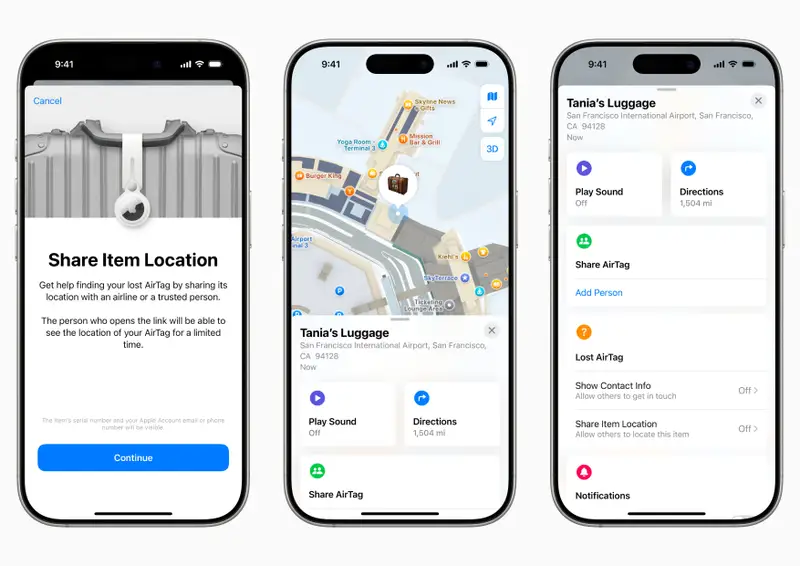
When a traveler shares their “Share Item Location” link with an airline, the carrier can integrate that map view directly into their baggage mishandling reports. This allows ground crew to pinpoint a bag that might be sitting on a tarmac cart or wrongly routed to a different terminal. This is a massive leap forward compared to barcode scanning, which only records where a bag was, not where it is.
Real-World Scenario: The Lost Instrument Case
Consider a musician traveling with expensive equipment. In the past, iPod news or iPod Classic news might have centered on the device’s storage, but today, musicians use Apple tech to protect their gear. If a guitar case containing an AirTag is lost, the musician can now generate a link. The airline agent opens the link on their secure terminal, sees the guitar is at a specific gate in a connecting airport, and can dispatch a runner to retrieve it. This reduces the “lost” duration from days to hours.
This feature also complements AirPods Pro news regarding travel features. Just as Adaptive Audio helps filter out airport noise, the peace of mind provided by active tracking reduces the cognitive load and stress of travel. It creates a holistic travel safety net within the Apple ecosystem.
Section 3: Privacy, Security, and Ecosystem Implications
The Privacy-First Approach
Whenever location data is shared, Apple privacy news and iOS security news are paramount. Apple has engineered this feature with strict guardrails. The shared link does not reveal the owner’s identity, home address, or history—only the current location of the AirTag. Furthermore, the owner can disable the link at any moment. This puts the control firmly in the hands of the user, distinguishing it from carrier-based trackers where the data ownership is often murky.
Additionally, access to these links by airline staff requires authentication through their corporate Apple accounts or specific partner portals, adding a layer of accountability. This prevents unauthorized personnel from accessing location data. It is a stark contrast to the open nature of physical luggage tags, which display personal information to anyone who looks.
Broader Ecosystem Integration
The utility of AirTag tracking extends to other devices. Apple Watch news frequently highlights health and fitness, but the Watch is also a primary interface for Find My notifications. Users receive haptic feedback on their wrist when a bag is left behind. With the new sharing feature, one could envision future integrations where Siri news updates involve voice-activated sharing: “Siri, share my checked bag’s location with Delta.”
UI UX designer sketching mobile wireframes – Royalty-Free photo: Web Design Layout Sketch | PickPik
We can also look at how this interacts with home devices. HomePod news and HomePod mini news suggest that users often ask their smart speakers for the location of keys or wallets before leaving the house. While the sharing feature is currently B2B focused (airlines), it could eventually expand to family sharing scenarios that are more temporary than the current “Family Sharing” setup, perhaps useful for lending items to friends.
Future-Proofing with AR and Vision Pro
Looking ahead, Apple Vision Pro news and Apple AR news suggest a future where finding lost items is a visual experience. Imagine wearing a headset and seeing a digital overlay pointing through walls to your luggage. While the “Share Item Location” feature is currently 2D map-based, the metadata supports 3D precision finding. This could lead to Vision Pro accessories news where specialized tags are used for high-value inventory tracking in warehouses, utilizing the same sharing protocol to guide workers to specific items.
Section 4: Best Practices and Strategic Use
Optimizing AirTag Placement
To maximize the effectiveness of the “Share Item Location” feature, hardware placement is critical. The signal must penetrate layers of fabric and potentially the aluminum shell of an aircraft hold.
- Placement: Avoid burying the AirTag deep in the center of a suitcase filled with dense liquids or metals. Place it in an outer pocket or a dedicated holder.
- Battery: Ensure the battery is fresh before a long trip. While iPod Nano news or iPod Shuffle news belongs to the past, the lesson of battery management remains relevant for all portable electronics.
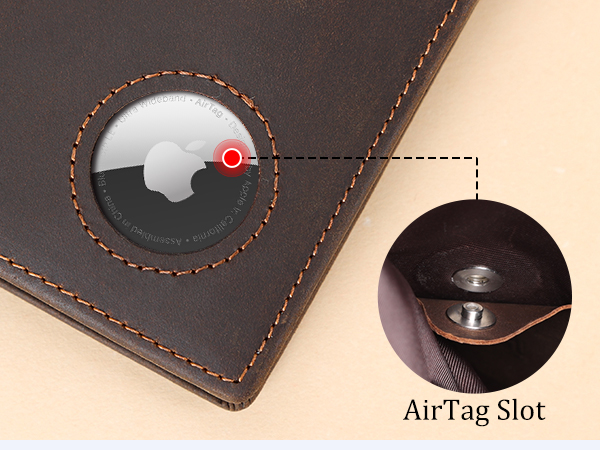
- Accessories: Use secure loops. Apple accessories news is filled with third-party mounts, but for luggage, concealment is often better than display to prevent theft of the tag itself.
Managing the Digital Link
When using the feature, users should be mindful of the link’s lifecycle.
- Generate only when necessary: Do not create a link preemptively. Only generate it when the bag is confirmed missing.
- Monitor Expiration: The link expires after a week. If the bag is still lost (a rare but possible scenario), a new link must be generated and sent to the airline.
- Revoke Access: As soon as the bag is in your hand, stop sharing. This is good digital hygiene, similar to managing app permissions discussed in Apple health news regarding data privacy.
Comparisons and Alternatives
While AirTags are dominant, they aren’t the only players. GPS trackers offer real-time satellite tracking but require subscriptions and frequent charging. AirTags rely on the mesh network. In remote areas with no iPhones, an AirTag is silent. However, in airports—some of the most densely populated places on earth regarding iPhone density—AirTags are superior. This makes them distinct from legacy tech or even nostalgia-driven concepts like iPod revival news; AirTags are strictly utilitarian tools for the modern connected world.
For creatives using the Apple Pencil news or iPad news ecosystem to design their travel itineraries (perhaps creating an iPad vision board news for their trip), the AirTag is the physical assurance that their tools will arrive safely. Even obscure accessories like the rumored Vision Pro wand news or Apple Pencil Vision Pro news will likely integrate into this Find My ecosystem, ensuring that expensive peripherals are never truly lost.
Conclusion
The introduction of the “Share Item Location” feature marks a pivotal moment in AirTag news and the broader travel industry. By dismantling the data silos between passengers and airlines, Apple has effectively crowdsourced the solution to one of travel’s most persistent headaches. This feature exemplifies the power of the Apple ecosystem news cycle: hardware (AirTag), software (iOS 18.2), and services (Find My) converging to solve real-world problems.
As we look to the future, the integration of Apple TV news for home monitoring, Apple TV marketing news promoting seamless living, and the continued evolution of iOS updates news, it is clear that the definition of “ownership” is changing. It now includes the digital ability to track, recover, and manage physical assets globally. Whether you are a casual traveler, a professional photographer, or someone nostalgic for iPod Mini news but living in a modern world, the ability to securely share your item’s location is a feature that turns anxiety into action. The era of helplessly waiting for a bag to appear on the carousel is ending; the era of collaborative recovery has begun.