
The technology landscape is currently undergoing a seismic shift driven by Generative AI, and nowhere is this pressure felt more acutely than at Apple Park. As the industry races toward Large Language Model (LLM) integration, Apple finds itself at a critical crossroads. Recent reports and industry analysis indicate a significant reorganization within Apple’s leadership structure, specifically targeting its Artificial Intelligence and machine learning divisions. This internal restructuring is arguably the most substantial leadership shake-up the company has faced in over a decade, signaling a drastic pivot in how the Cupertino giant approaches Siri news, software development, and its broader ecosystem.
For years, Siri has served as a functional, albeit limited, voice assistant. However, the explosion of competitors like ChatGPT and Google Gemini has rendered the traditional command-and-control voice interface obsolete. Apple’s response—branded as “Apple Intelligence”—has faced delays and technical hurdles, leading to high-profile departures and a consolidation of power. This article delves deep into the technical and organizational challenges Apple faces, the implications for hardware ranging from the iPhone to the Apple Vision Pro, and what this leadership overhaul means for the future of ambient computing.
The Anatomy of the Shake-Up: Why Leadership is Changing
To understand the future of Apple’s AI, we must first analyze the friction causing these leadership changes. Apple’s culture has historically been hardware-driven, prioritizing design, battery life, and on-device efficiency. In contrast, modern AI development requires massive cloud compute resources, rapid iteration, and a tolerance for the “hallucinations” inherent in LLMs. These two philosophies have clashed, leading to the current reorganization.
The Clash of Cultures: Hardware vs. Services
The recent departures of key executives in the AI division highlight a struggle to modernize Siri. Historically, Siri’s database was built on a rigid architecture designed to perform specific tasks (setting timers, playing music). transitioning this to a generative model requires a fundamental rewrite of the underlying code. The leadership shake-up suggests that the previous approach—incremental updates to legacy code—was insufficient. Apple is now seemingly pivoting toward a structure that empowers software engineering leaders to take direct control over AI implementation, reducing the silo effect between the research teams and the product teams.
The “Apple Intelligence” Delays
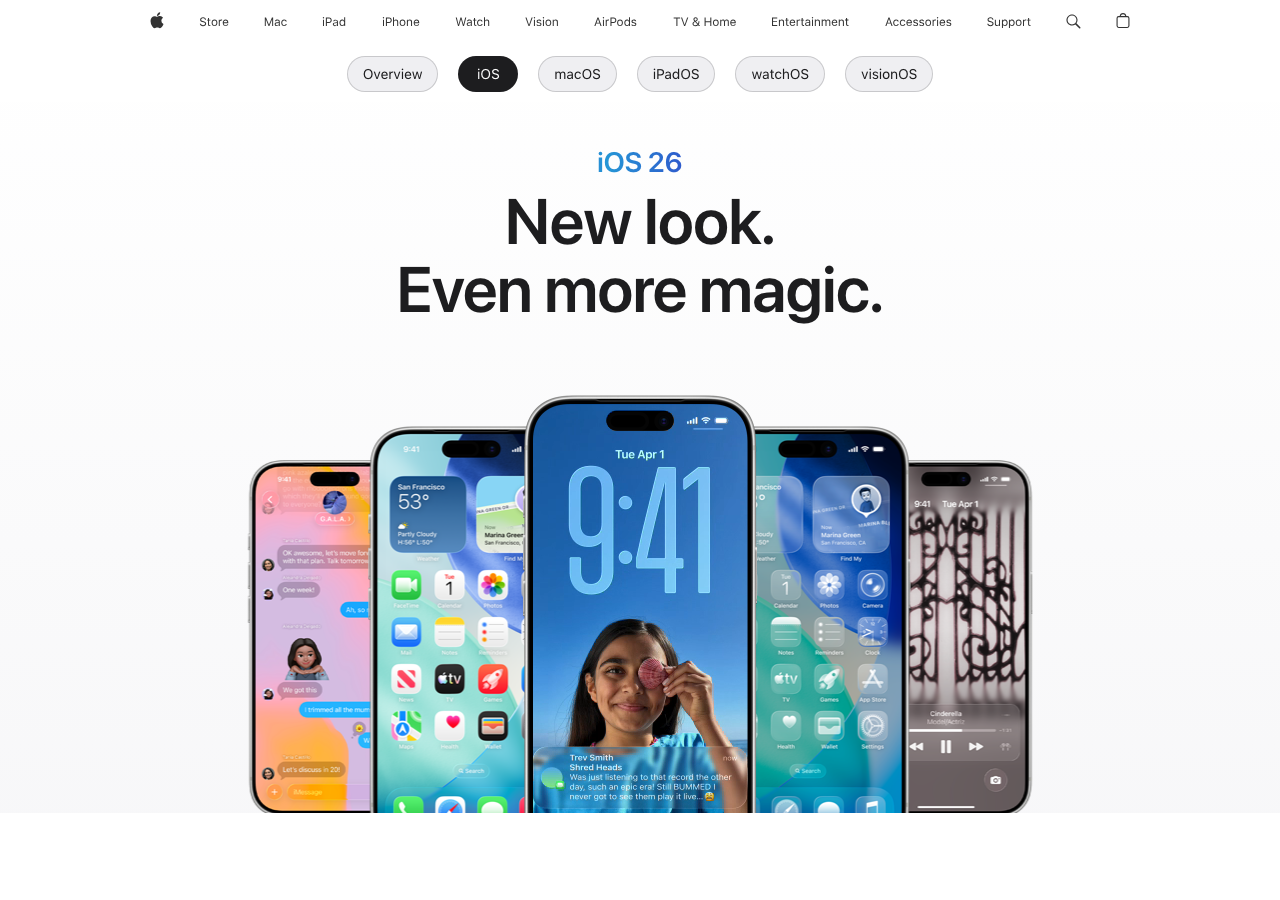
A major catalyst for this reorganization is the staggered rollout of Apple Intelligence. While iOS updates news usually promises feature parity upon release, the AI features announced for iOS 18 have been pushed back, with some not expected until well into 2025. This delay indicates that the integration of generative models into the core operating system is more complex than anticipated. The leadership changes are likely a corrective measure to streamline decision-making and accelerate the deployment of these critical features across the Apple ecosystem news cycle.
Technical Deep Dive: Siri’s Modernization Struggles
Why is fixing Siri so difficult? The answer lies in the dichotomy between privacy and capability. Apple has built its brand on Apple privacy news and iOS security news, promising that user data stays on the device. However, the most powerful AI models run in the cloud.
On-Device Processing vs. Private Cloud Compute
The new leadership is tasked with perfecting a hybrid architecture. Apple is attempting to run smaller, efficient models directly on the Neural Engine of the iPhone and iPad, while offloading complex queries to “Private Cloud Compute.” This technical balancing act is immense. If the on-device model is too weak, Siri looks incompetent. If the cloud hand-off is too slow, the user experience suffers. The struggle to optimize this hand-off without compromising security protocols has been a primary bottleneck, contributing to the reported internal friction.

The Contextual Awareness Challenge
Legacy Siri processes commands in a vacuum. If you ask about the weather, it checks a weather API. The goal of the modernized Siri is “Personal Context.” It needs to understand that when you ask, “When is Mom’s flight landing?”, it must cross-reference your contacts, your messages, and flight data simultaneously. This requires deep system-level access, which introduces significant iOS security news implications. The leadership reorganization aims to place leaders in charge who can navigate the delicate balance between opening up system permissions for AI and maintaining the “walled garden” security architecture.
Implications Across the Ecosystem
The modernization of Siri and the leadership restructuring have ripple effects that touch every product line. From the latest flagship phones to nostalgic legacy devices, the AI strategy dictates the future of hardware.
The iPhone and iPad: The Primary Interface
Naturally, iPhone news and iPad news dominate the conversation. The iPhone 16 lineup is built specifically with the A18 chip to handle these new AI demands. However, the software delays mean the hardware is shipping with “potential” rather than immediate capability. For the iPad, the implications are even greater. With Apple Pencil news suggesting new interactive features, a smarter Siri could turn the iPad into a true creative partner, generating images or summarizing notes based on handwritten input.
Spatial Computing: Vision Pro and AR
Perhaps the most critical area for the new AI leadership is Apple Vision Pro news. In a spatial environment, typing is cumbersome. Voice and gaze are the primary inputs. A “dumb” Siri breaks the immersion of the Vision Pro. The leadership shake-up likely prioritizes getting generative AI onto visionOS to justify the headset’s high price point. Furthermore, as we look toward Apple AR news and potential future “smart glasses,” a conversational, context-aware AI is not a luxury—it is a necessity.
There is also speculation regarding Vision Pro accessories news and even Vision Pro wand news—conceptual controllers that could utilize AI to predict user intent. Without a robust AI backend, these hardware innovations remain gimmicks.
Wearables and The Home
The constraints of power and thermal dynamics make AI difficult on smaller devices. Apple Watch news often focuses on health, and a smarter Siri could revolutionize Apple health news by correlating workout data with sleep patterns to give generative health advice. Similarly, the home ecosystem is desperate for a Siri upgrade. HomePod news and HomePod mini news have long been plagued by Siri’s limitations compared to Alexa. The leadership change signals a renewed focus on making the HomePod a viable smart home hub rather than just a high-quality speaker.
Audio Intelligence
AirPods news, AirPods Pro news, and AirPods Max news are increasingly focusing on software. Features like “Voice Isolation” and “Conversation Awareness” are machine learning tasks. A modernized Siri could allow for real-time translation directly in your ear or context-aware notifications that know not to disturb you when you are in a deep focus state.
Nostalgia vs. Innovation: The Evolution of Apple’s DNA
To understand where Apple is going, it is fascinating to look at where it has been. The current turmoil is about moving away from the static interfaces of the past.
The Legacy of the iPod
Long-time followers of iPod news remember a simpler time. Whether it was the click wheel discussed in iPod Classic news, the diminutive form factor in iPod Shuffle news and iPod Nano news, or the touch interface in iPod Touch news, the interaction was manual and direct. Even iPod Mini news from two decades ago reminds us of Apple’s mastery of physical controls.
Today, we see a resurgence of interest in iPod revival news, driven by a desire to disconnect from the “always-on” AI world. However, Apple’s leadership is pushing in the opposite direction. They are moving from the explicit control of the iPod era to the implicit, predictive control of the AI era. The friction in leadership is essentially the friction of leaving the “iPod DNA” behind to embrace a probabilistic, AI-driven future.
Strategic Analysis: Pros, Cons, and Future Outlook
The leadership shake-up is a high-stakes gamble. By consolidating AI teams and pushing out executives who may have been too conservative or too focused on legacy systems, Apple is trying to correct its course. Here is an analysis of this strategy.
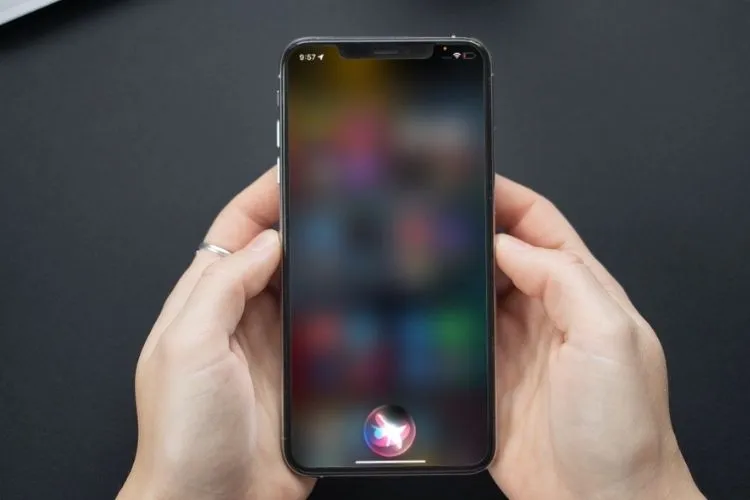
The Pros: Integration and Privacy
- Vertical Integration: Apple controls the silicon (M-series, A-series), the OS, and the AI model. This allows for optimizations that competitors cannot match.
- App Intents: The new leadership is doubling down on “App Intents,” an API that allows Siri to control third-party apps. If successful, this will make Siri an “agent” that can actually do things, not just answer questions.
- Trust: By focusing on on-device processing, Apple maintains its stance on privacy. AirTag news and Apple accessories news often highlight tracking concerns; applying strict privacy governance to AI helps mitigate fears of data misuse.
The Cons: The “Late Mover” Disadvantage
- Talent Drain: Leadership shake-ups often lead to morale issues and talent attrition. If top researchers leave for OpenAI or Google, Apple’s progress could stall further.
- The “Good Enough” Trap: There is a risk that Apple’s on-device models will be significantly less capable than cloud-native competitors. If Siri cannot write code or analyze complex documents like ChatGPT, users may bypass Siri entirely.
- Hardware Fragmentation: Advanced AI requires RAM. This leaves older devices behind, potentially alienating users who follow iPad vision board news or use older hardware for creative workflows.
Real-World Scenarios: What the New Siri Must Deliver
To justify the leadership turmoil and the billions spent on R&D, the new Siri must deliver in concrete scenarios. Here is what the “North Star” looks like for the new executive team:
- The “Apple TV Marketing” Scenario: Currently, Apple TV news revolves around content. A modernized Siri should allow a user to say, “Find that sci-fi movie with the guy from The Office,” and have it search across all streaming services instantly. Apple TV marketing news would shift from promoting shows to promoting the intelligence of the search.
- The Workflow Automation: A user receives an email with a flight itinerary. Siri automatically adds it to the calendar, sets a reminder to pack based on the weather at the destination, and creates a packing list in Notes. This requires the deep integration that only a unified software/AI leadership team can execute.
- The Vision Pro Workspace: A user wearing a Vision Pro looks at a virtual screen. They use an Apple Pencil (referencing Apple Pencil Vision Pro news concepts) to circle a paragraph. They ask Siri, “Turn this into a slide deck.” Siri generates a Keynote presentation instantly.
Conclusion
The recent leadership shake-up at Apple is not merely corporate housekeeping; it is a symptom of the most significant technological pivot in the company’s history since the launch of the iPhone. The departure of key executives and the restructuring of the AI division underscore the immense difficulty of modernizing Siri from a command-based assistant to a generative AI agent.
While the delays in Apple Intelligence are a short-term setback, the reorganization suggests that Apple is finally treating AI as a foundational layer of the OS rather than a feature. From the high-fidelity audio of AirPods Max news to the cutting-edge spatial computing of the Vision Pro, every corner of the ecosystem depends on the success of this transition. As Apple moves further away from the mechanical simplicity of the iPod news era and into the complex, probabilistic world of Generative AI, the success of this new leadership team will determine whether Siri becomes a true digital companion or remains a legacy utility.