
The Reality Check We Didn’t Want
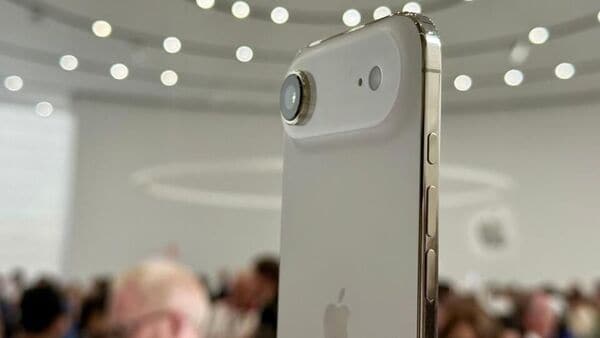
I’m sitting here looking at my charging cable for the third time today. If you bought into the “Slim” hype cycle earlier this year, you probably know exactly what I’m feeling. We all wanted the thinnest iPhone ever, and when Apple finally delivered that form factor with the 17 series in September, it felt like a victory for design over utility. But now, the rumor mill is churning again, and it’s delivering some hard truths about the successor to this ultra-thin experiment.
For months, I’ve been hearing whispers that Apple would fast-track the second generation—let’s call it the iPhone Air 2—to early 2026 to fix the battery stamina and thermal throttling issues that plague the current model. It made sense. Why leave a flawed product on the shelf for a full year? But fresh information crossing my desk suggests that we need to pump the brakes. The iPhone Air 2 isn’t coming in the spring. It’s looking like a late 2026 release.
This changes my entire recommendation strategy for anyone asking me what phone to buy right now. If you were holding out for a quick fix to the Air’s teething problems, you are out of luck. We are stuck with the current trade-offs for the long haul.
Why the Delay Makes Technical Sense
I hate delays as much as anyone, but when I look at the engineering hurdles, a late 2026 target for the Air 2 actually adds up. The current chassis is simply too thin for the battery technology we have available *right now*. To get a “all-day” battery that actually lasts all day—not just on a spec sheet—Apple needs the next generation of high-density battery stacks that are barely entering mass production.
I’ve been tracking **iPhone news** closely, and the supply chain chatter indicates that the thermal management systems required to run an A20 chip (or whatever they call the next silicon) in such a tight enclosure without burning your fingers simply aren’t ready for a Q1 2026 launch.
This isn’t just about hardware, either. It’s about how the software handles power. I’ve noticed that recent **iOS updates news** has focused heavily on background process optimization. Apple is trying to squeeze every drop of efficiency out of the software because the hardware is hitting a physical wall. If they rushed the Air 2 out in the spring, we’d just get another device that gets hot when you look at it wrong.
The Echoes of the iPod Era
It’s funny how history repeats itself. Watching this obsession with thinness reminds me vividly of the old **iPod news** cycles from the mid-2000s. I remember when the **iPod Mini news** broke, and everyone lost their minds over the size reduction. Then came the **iPod Nano news**, pushing it even further, followed by the **iPod Shuffle news** where the device was basically just a clip.
We are seeing that same trajectory with the iPhone now. The “Air” moniker is doing the same work it did for the **iPod Touch news** back in the day—signaling that form factor is the primary feature. But there’s a catch. When I read about **iPod Classic news** or even the **iPod revival news** that pops up in forums, the nostalgia is always about reliability and storage, not just thinness.
The **iPod Nano** eventually got so thin it became difficult to hold. I worry the iPhone Air line is flirting with that same danger zone. A phone needs to be substantial enough to grip, especially when you are trying to take a stable photo or type a quick email. If the Air 2 is delayed until late 2026, I hope they use that time to find the balance between “futuristic slab of glass” and “actually usable tool.”
Ecosystem Integration: The Hidden Dependency
Here is where my perspective shifts from “hardware critic” to “ecosystem user.” A thinner, lighter phone with less battery life forces you to lean harder on your peripherals. Since I switched to a smaller device, I rely on my watch and headphones way more to save phone screen time.
This puts a spotlight on **Apple Watch news**. If my phone is dead or charging, my Watch becomes my primary communication tether. The Series 11 (and the Ultra 3) are doing heavy lifting here. I’m seeing more people ask about **Apple Watch health news** not just for fitness, but for independence from the phone.
Similarly, **AirPods Pro news** is vital here. I use Siri through my AirPods to send texts because I don’t want to pull out my phone and drain the battery. The integration is seamless, sure, but it feels like a crutch. And don’t get me started on **AirPods Max news**—I’m still waiting for a lighter version of those cans to match the “Air” aesthetic of the phone.
The delay of the Air 2 also impacts how we view accessories. I’ve been looking into **Apple accessories news** to find MagSafe battery packs that don’t look ridiculous on the back of a slim phone. Most current packs are thicker than the phone itself, which defeats the purpose. By late 2026, I expect Apple or third parties to figure out a slimmer magnetic power solution.
The Vision Pro Connection
We can’t talk about the 2026 roadmap without addressing the headset in the room. **Apple Vision Pro news** has quieted down a bit since the initial hype, but the integration with the iPhone is becoming critical. I suspect the delay in the iPhone Air 2 might be tied to the next iteration of the Vision hardware.
There is a lot of smoke around **Vision Pro wand news** and new control methods. If the iPhone Air 2 is meant to serve as a companion controller or a primary compute node for a lighter set of “Apple Glasses” or a cheaper Vision headset, the timing needs to align perfectly.
I’ve seen patents and **Apple Pencil Vision Pro news** suggesting that future mobile devices will act as precise input tools for AR environments. If the Air 2 is going to support ultra-wideband interactions for **Apple AR news**, the chips need to be ready. Rushing it out now without that capability would be a waste.
I’m also keeping an eye on **iPad vision board news**—rumors that the iPad and iPhone will share more spatial computing features. If the Air 2 is the bridge device for the spatial era, it explains why they are taking their time.
Privacy and Security in a Slim Package
One thing I rarely see discussed in the “thin phone” debate is the physical security aspect. **Apple privacy news** often focuses on software, but hardware security matters too. Thinner devices are harder to shield against physical tampering and side-channel attacks.
I track **iOS security news** religiously, and shrinking the logic board means packing components closer together. This creates challenges for heat dissipation, which can actually impact the reliability of the Secure Enclave under stress. I’d bet money that part of the engineering delay for the 2026 model involves re-architecting the logic board to maintain security standards without creating a thermal hotspot.
Also, **AirTag news** is relevant here. The precision finding features rely on UWB chips. As these chips get smaller and more power-efficient, they fit better in slim chassis. I want the Air 2 to have the best tracking capabilities, especially if it’s small enough to slip between couch cushions easily.
The Home Context
When I’m at home, my phone usage changes. I hand off music to the speaker system constantly. **HomePod news** has been slow lately, but the software integration is getting better. I use the “tap to transfer” feature daily.
However, a phone with a smaller battery makes me rely more on stationary hubs. I find myself using the **Apple TV** interface more for things I used to do on my phone, like browsing photos or checking weather. Speaking of which, **Apple TV marketing news** seems to be pivoting toward the TV as a home hub, which aligns with the idea of the phone becoming more portable and less of a “do everything” brick.
Even the **HomePod mini news**—mostly new colors lately—reminds me that Apple wants us to offload tasks to the ambient computing environment. If your phone is slim and light, you don’t want to be tethered to it for heavy lifting. You want the house to do the work.
The Tablet Conundrum
The existence of the iPhone Air creates a weird conflict with the iPad. Specifically, **iPad news** has been dominated by the incredibly thin iPad Pro M5 models. They are impossibly thin. If the iPad is thin and powerful, and the phone is thin and… less powerful, where is the middle ground?
I use an **Apple Pencil news** app on my iPad for work, and I often wish I could use the Pencil on my iPhone Air. But the screen technology on the slim iPhone doesn’t support the digitizer layer needed for the Pencil (adds thickness). Maybe the 2026 Air 2 will solve this? It’s a long shot, but **Apple Pencil news** suggests they are working on active styluses that don’t require specific screen layers. That would be a game-changer for the Air line.
What This Means for Your Wallet
So, here is the bottom line. It is December 2025. You are looking at the iPhone 17 lineup. You see the “Air” model, and you see the Pro models.
If you buy the current Air, you are buying a first-generation design. It’s beautiful, but it has flaws. I own one, and I love holding it, but I hate charging it at 4 PM.
If you were waiting for the Air 2 in a few months, stop waiting. The timeline has shifted. You have two choices:
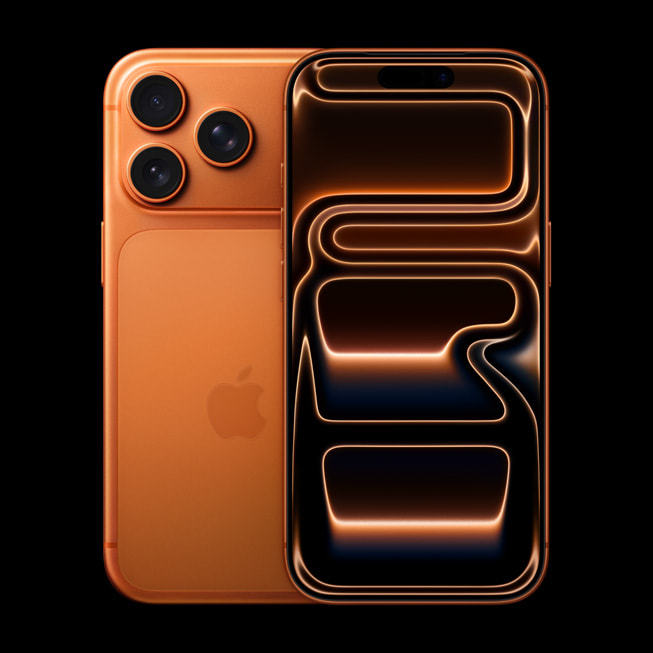
1. Buy the iPhone 17 Pro now. It’s thicker, heavier, but the battery is a beast and the cameras are superior.
2. Buy the current Air and accept the battery life as the cost of admission for the form factor.
Do not wait for 2026 unless you are willing to wait until *next* Christmas.
The Nostalgia Factor: Why We Wait
I think the reason we are all so obsessed with this specific model—and why **iPod Shuffle news** or **iPod Classic news** still gets clicks—is that we are tired of carrying bricks. We miss the days when technology felt light and effortless.
I recently read some **iPod Mini news** retrospectives that talked about how that device changed fashion. The iPhone Air is trying to do that again. It’s a fashion object as much as a tool.
But fashion requires patience. Apple isn’t going to release a “fat” Air 2 just to hit a deadline. They are going to wait until the tech allows them to keep the silhouette while fixing the engine.
Final Thoughts on the Roadmap
The delay to late 2026 also aligns with **Siri news**. The next generation of on-device AI (Siri 2.0 or whatever they brand it) is hungry. It needs RAM, and it needs power. Putting that into a slim chassis is the ultimate engineering flex.
If I look at **Apple health news**, the sensors are also taking up space. Blood pressure monitoring, glucose trending—these things need physical volume. The Air 2 has to balance these new sensors with the slim profile.
And let’s not forget the obscure stuff. **Vision Pro accessories news** and **Vision Pro wand news** might seem niche, but they signal a future where the phone stays in your pocket while you interact with the world through glasses. The Air 2 is the phone for *that* future.
So, while the news of a delay stings, I accept it. I’d rather wait for a polished diamond in late 2026 than buy a polished turd in early 2026. Until then, I’ll keep my charger handy and enjoy the fact that my phone disappears in my pocket, even if it dies a little too soon.
If you are a collector or just love the history, keep an eye on **iPod revival news**. There is a growing community modding old iPods with modern batteries and Bluetooth. Honestly? Modding an old iPod Video might be the most fun project you can do while you wait for Apple to figure out the physics of the iPhone Air 2.